
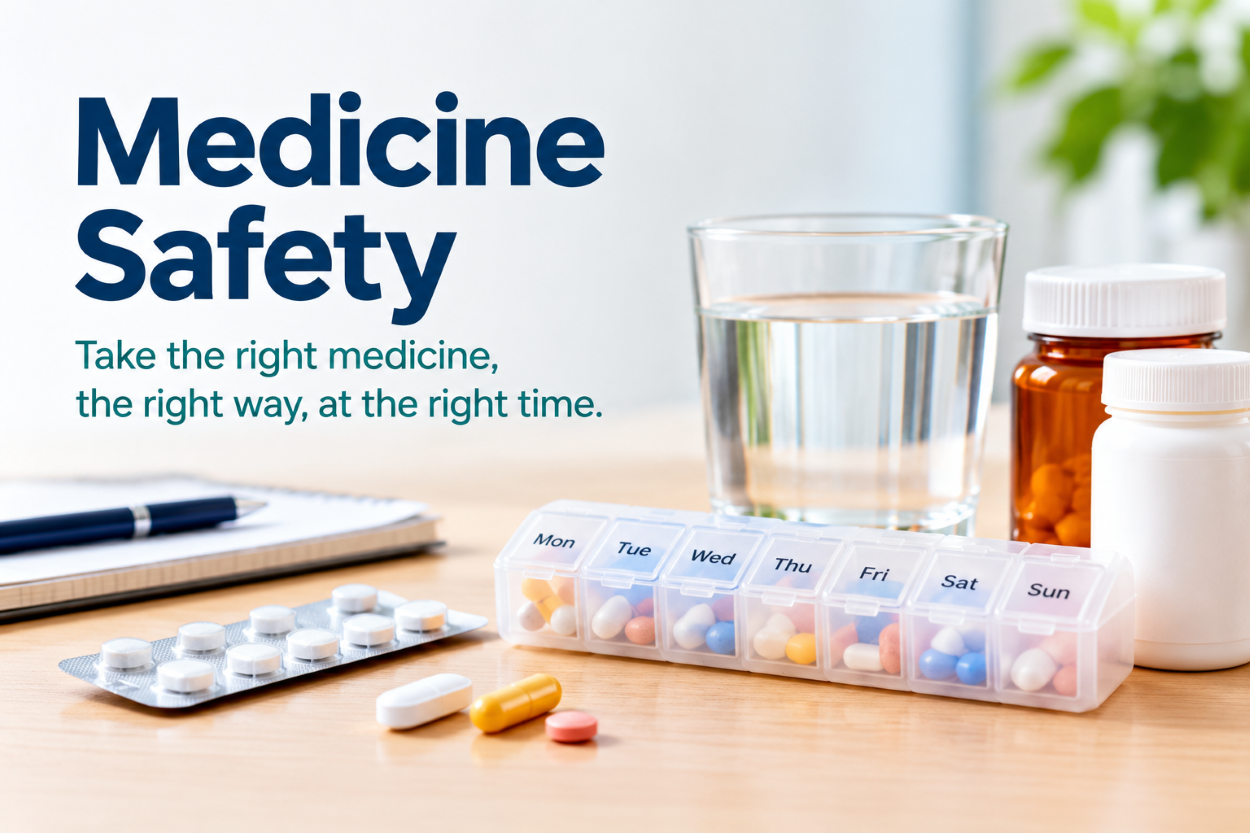
The Complete Guide to Medicine Safety: How to Take Medicines Safely
Medicines play an important role in healthcare. They can help manage long-term health conditions, treat infections, relieve symptoms, and improve quality of life. However, medicines must be used correctly to reduce the risk of mistakes, side effects, and harmful interactions.
Whether you take a prescription medicine every day or use an over-the-counter product occasionally, understanding basic medicine safety can help you make informed decisions.
Medication safety is especially important if you take several medicines, look after an older family member, or manage medicines for someone else.
Here are 10 practical ways to use medicines more safely and develop better medication habits.
1. Always Follow the Instructions
One of the most important medicine safety habits is to follow the instructions provided by your doctor, pharmacist, and medicine label.
Pay attention to the prescribed dose, timing, route of administration, and duration of treatment. Some medicines need to be taken with food, while others may need to be taken on an empty stomach.
Do not assume that two medicines can be used in the same way simply because they treat similar symptoms.
If you do not understand a direction on the label, ask your pharmacist or doctor to explain it. Never guess the dose or change the way you take a medicine without appropriate professional advice.
2. Understand What Each Medicine Is For
It is useful to know the name of every medicine you take and why it has been prescribed or recommended.
Keep track of its active ingredient, purpose, dosage instructions, possible side effects, storage requirements, and expiration date.
This information can help you recognise when you have been given a different product or when you need clarification about your treatment.
Over-the-counter medicines deserve the same attention as prescription medicines. Products used for headaches, allergies, colds, or sleep can still cause side effects and interactions.
If you are unsure why you are taking a particular medicine, ask your healthcare professional. Do not discontinue a prescribed treatment merely because you feel better or no longer understand its purpose.
3. Keep an Updated List of Your Medicines
Taking several medicines can make it difficult to remember every name, dose, and instruction.
Maintain a current list that includes:
- Prescription medicines.
- Over-the-counter medicines.
- Vitamins and dietary supplements.
- Herbal products.
- Known medicine allergies or previous serious reactions.
Include the dosage and instructions for each medicine, along with the prescribing professional when useful.
Keep the list accessible and share it with your doctor, pharmacist, and other relevant healthcare professionals. Update it whenever a medicine is started, stopped, or changed.
Amazon product recommendation: Medication List Notebook (paid link)
A dedicated medication notebook can help you record medicine names, instructions, appointment notes, and questions for your pharmacist.
Choose one with readable sections, sufficient writing space, and a format that is easy to carry or store safely.
A notebook is optional; a paper sheet or secure digital document can work just as well.
4. Check for Medicine Interactions
A medicine interaction occurs when one medicine affects another medicine, food, beverage, supplement, or health condition.
Some interactions can change how well a medicine works or increase the chance of side effects. Certain combinations can be serious.
For example, two products marketed for cold symptoms may contain the same active ingredient. Using them together without checking the labels could result in taking more than the recommended amount.
Alcohol and some medicines may also interact. Vitamins and herbal supplements can affect prescription treatments as well.
Before starting a new medicine or supplement, tell your pharmacist or doctor everything you currently take. Using one pharmacy for your prescriptions, when practical, may also help your pharmacist review your medication history.
Never assume that a product is harmless simply because it is available without a prescription.
5. Know What to Do If You Miss a Dose
Forgetting a dose can happen to anyone. The correct response depends on the particular medicine, its dosing schedule, and how much time has passed.
Check the medicine’s patient instructions or contact your pharmacist for guidance.
Do not automatically take two doses together to make up for a missed dose. Some medicines have specific instructions for missed doses, while others require individual advice.
If you are uncertain whether you have already taken a dose, avoid guessing. Seek guidance from your pharmacist or healthcare professional.
If you regularly forget medicines, consider establishing a routine linked to an everyday activity, using an appropriate reminder, or asking a trusted caregiver for help.
6. Never Share Prescription Medicines
Prescription medicines are selected according to an individual’s health circumstances, medical history, other medicines, and treatment needs.
A medicine that is appropriate for one person may be unsuitable or dangerous for someone else.
Even if another person has symptoms that appear identical to yours, you cannot safely assume that the same medicine or dose is appropriate.
Never share prescription medicines, use someone else’s prescription, or take leftover prescription medicines without professional guidance.
If your symptoms are concerning or do not improve, consult a healthcare professional rather than borrowing medication.
7. Store Medicines Correctly
Storage conditions can affect medicine quality and effectiveness.
Read the storage instructions on the label. Many medicines should be kept in a cool, dry place, away from excessive heat, moisture, and direct sunlight. Some medicines require refrigeration or other specific conditions.
The bathroom is not always a suitable storage location because humidity and temperature can fluctuate.
Keep medicines in their original labelled containers whenever possible. This helps preserve important information, including the medicine name, strength, expiration date, and instructions.
Medicines should also be kept out of sight and reach of children and pets. Use child-resistant closures correctly and secure medicines after every use.
Amazon product recommendation: Lockable Medicine Storage Box (paid link)
A lockable storage box may help keep medicines secure, especially in households with children or visitors who could accidentally access them.
Choose a box that is secure, easy for authorised adults to access, and large enough to store medicines in their original containers.
Check that its storage environment suits the medicines you keep inside. A storage box should not replace special temperature or refrigeration requirements.
8. Check Expiration Dates and Dispose of Unwanted Medicines Safely
Medicines should not be used beyond their expiration dates unless a qualified professional provides specific, appropriate instructions.
Expired medicines may lose effectiveness or become unsuitable for use. Do not rely on appearance alone to determine whether a medicine is safe.
Periodically review your medicine supply and separate expired or unwanted products for proper disposal.
In the United States, medicine take-back programmes are often a preferred disposal option. Follow the medicine’s label and official disposal guidance because recommendations vary by product. Do not flush medicines down a toilet or sink unless the product-specific instructions or official guidance say to do so.
Keep medicines awaiting disposal secure and away from children and pets.
9. Watch for Side Effects and Seek Help When Necessary
Medicines can cause side effects, and the effects differ from one person to another.
Read the patient information supplied with your medicine and ask your healthcare professional what side effects to watch for and which require urgent attention.
If you notice a new or unusual symptom after starting a medicine, contact your doctor or pharmacist for advice. Do not stop or alter an important prescribed treatment without appropriate guidance unless you are experiencing an emergency that requires immediate care.
If you suspect an overdose or a medication poisoning in the United States, contact Poison Control at 1-800-222-1222 for expert guidance. If the person collapses, has a seizure, has trouble breathing, or cannot be awakened, call 911 immediately.
Do not wait for symptoms to become severe before seeking help after a suspected overdose.
10. Review Your Medicines Regularly
Your medication needs can change over time. A medicine that was appropriate several years ago may need to be reassessed as your health, other treatments, or circumstances change.
Ask your doctor or pharmacist to review your medicines periodically, especially if you take several prescriptions, see multiple healthcare professionals, or experience new side effects.
Bring your updated medicine list to appointments. Ask whether each medicine is still needed, whether any interactions should be reviewed, and whether instructions have changed.
Older adults and people who take several medicines may particularly benefit from a careful review.
Never stop a medicine, change its dose, or substitute another product simply because you read a general recommendation online.
Useful Amazon Products for Medicine Safety
The following products may help with organisation and storage, but they do not replace professional advice or correct medicine use.
1. Medication List Notebook (paid link)
Useful for: Recording medicine names, dosage instructions, allergies, and questions for healthcare appointments.
What to consider: Readability, layout, portability, and ease of updating.
2. Lockable Medicine Storage Box (paid link)
Useful for: Keeping medicines secure in households where children or other unauthorised people might access them.
What to consider: Lock quality, available space, accessibility for authorised users, and compatibility with required storage conditions.
3. Medication Reminder Alarm or Digital Reminder Clock (paid link)
Useful for: Reminding users when a scheduled medicine is due.
What to consider: Clear alerts, easy-to-use controls, volume, display readability, and whether it suits the user’s routine.
4. Weekly Pill Organizer (paid link)
Useful for: Helping some people organise doses when their pharmacist confirms that transferring their particular medicines into an organizer is appropriate.
What to consider: Readable compartments, secure closure, ease of opening, and suitability for the medicines involved. Some medicines need to remain in their original packaging, so check with your pharmacist before using an organizer.
These products are optional tools. Compare features, current prices, availability, and customer feedback before purchasing. Do not choose a product solely because it is marketed as a medicine safety aid.
Frequently Asked Questions
Why is medicine safety important?
Incorrect use of medicines can lead to dosing mistakes, harmful interactions, side effects, and treatment problems. Following instructions and consulting healthcare professionals can help reduce avoidable risks.
Should I stop taking a medicine if I experience a side effect?
Contact your doctor or pharmacist promptly for advice. Some reactions require urgent medical attention. Do not independently stop or change prescribed treatment without appropriate guidance, except when an emergency requires immediate action.
Can I take over-the-counter medicines with prescription medicines?
Sometimes, but not every combination is appropriate. Check with your pharmacist or doctor before combining medicines, particularly if you also use supplements or have chronic health conditions.
What should I do if I accidentally take too much medicine?
Seek immediate expert guidance. In the United States, contact Poison Control at 1-800-222-1222. Call 911 immediately if the person collapses, has a seizure, has difficulty breathing, or cannot be awakened.
Is a pill organizer necessary?
No. Some people find organizers helpful, but not all medicines are suitable for transfer from their original packaging. Ask your pharmacist before using one.
Final Thoughts
Medicine safety begins with understanding what you take, following instructions, checking for interactions, and storing medicines correctly.
Keep an updated medication list, ask questions whenever directions are unclear, and seek professional guidance when a dose is missed or a side effect occurs. Simple organisational tools may also help you maintain a reliable routine.
Most importantly, remember that medicines should be used according to appropriate professional advice—not based solely on an online article or another person’s experience.
Medical Disclaimer
The information provided in this article is for general educational and informational purposes only. It is not intended to diagnose, treat, cure, or prevent any disease or medical condition, and it should not be considered a substitute for professional medical advice, diagnosis, or treatment. Always follow the instructions provided by your doctor, pharmacist, and medicine label. Do not start, stop, combine, or change the dose of any medicine based solely on information presented on Vitality Shield. Consult a qualified healthcare professional about medicine interactions, missed doses, side effects, and storage requirements. For suspected overdose or poisoning, seek urgent expert guidance; call 911 for a life-threatening emergency in the United States.
Amazon Affiliate Disclosure
As an Amazon Associate I earn from qualifying purchases.
Vitality Shield participates in the Amazon Associates Program, an affiliate advertising program designed to provide a means for websites to earn advertising fees by advertising and linking to Amazon.com. When you purchase eligible products through our Amazon affiliate links, we may earn a commission at no additional cost to you.